Elizabeth Morton
Darvel’s Lace Queen

Darvel lace · A town tradition
Between 1934 and 1953, Darvel crowned ten Lace Queens. The ceremony put the town’s industry on public display—but it was the people, preparation and procession that made it memorable.
Read the story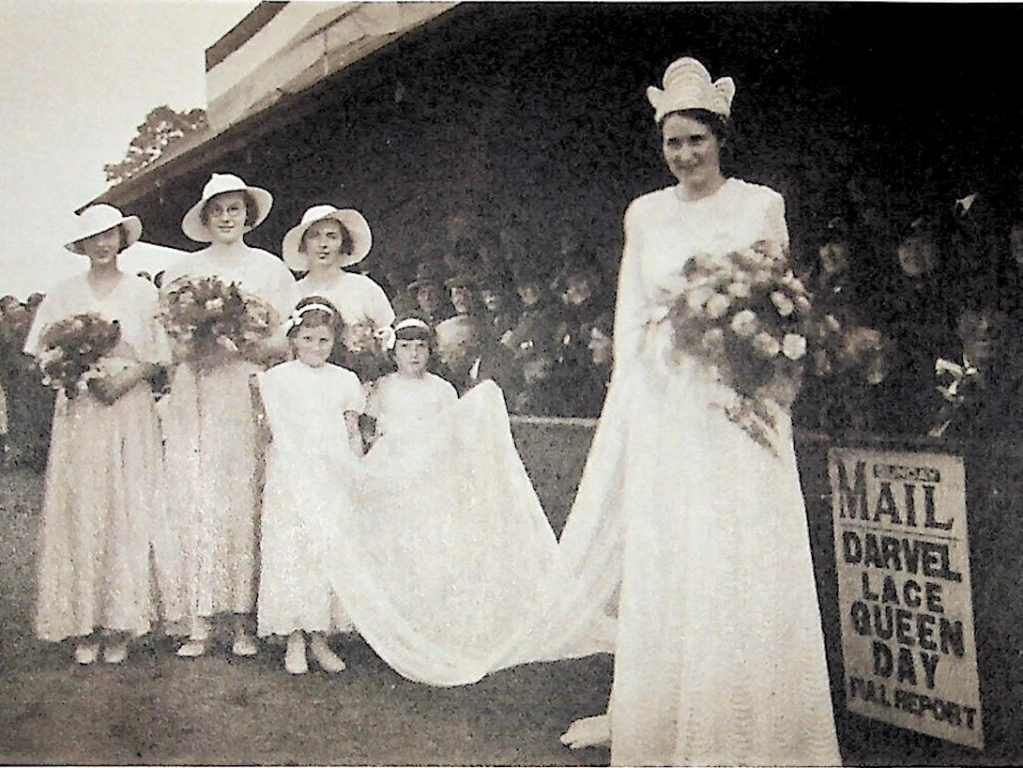
More than a title
Lace Queen day turned factory pride into a town occasion.
Local manufacturers took the contest seriously. Dresses were designed, flowers arranged, speeches prepared and floats decorated. The Queen was joined by attendants, flower girls, train bearers and page boys, drawing workers and families into the ceremony.
The exact selection process has not survived clearly in the record. What has survived is the scale of the effort—and the names and faces of many who took part.
The first two years
Elizabeth Morton, granddaughter of lace pioneer Alexander Morton, became the first Queen in 1934. Her dress used 18 yards of lace made by Alexander Morton & Company.
In 1935, Helen Gebbie made her own dress from ivory-coloured silk manufactured by John Aird & Co. Her father, Nicol Gebbie, made the crown. It was given to the town and used again in later celebrations.
The pageantry was elaborate. The workmanship was local.
A public ceremony
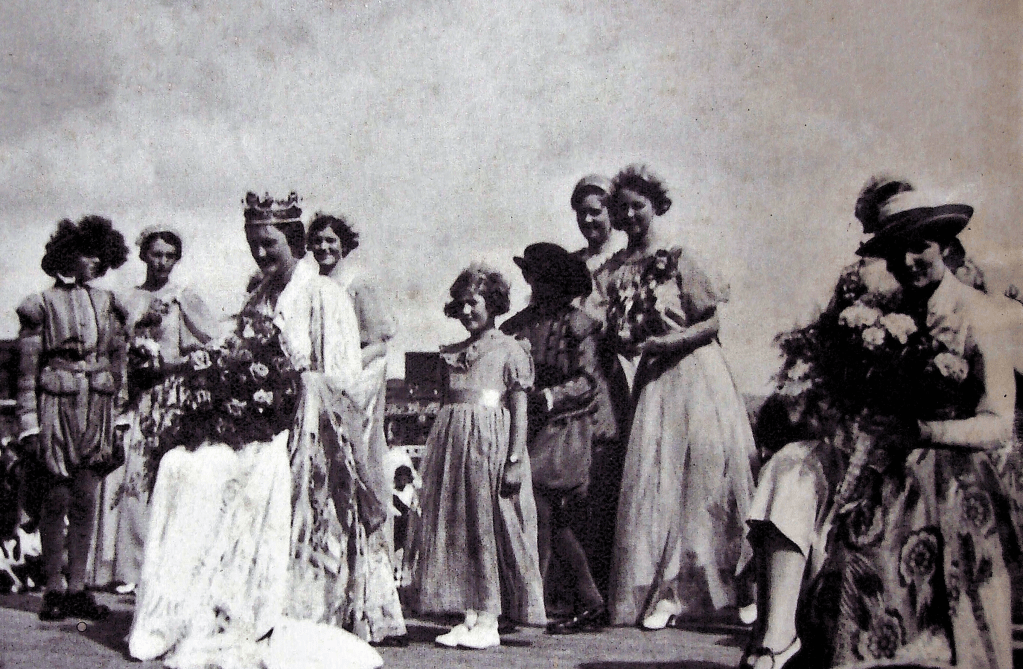
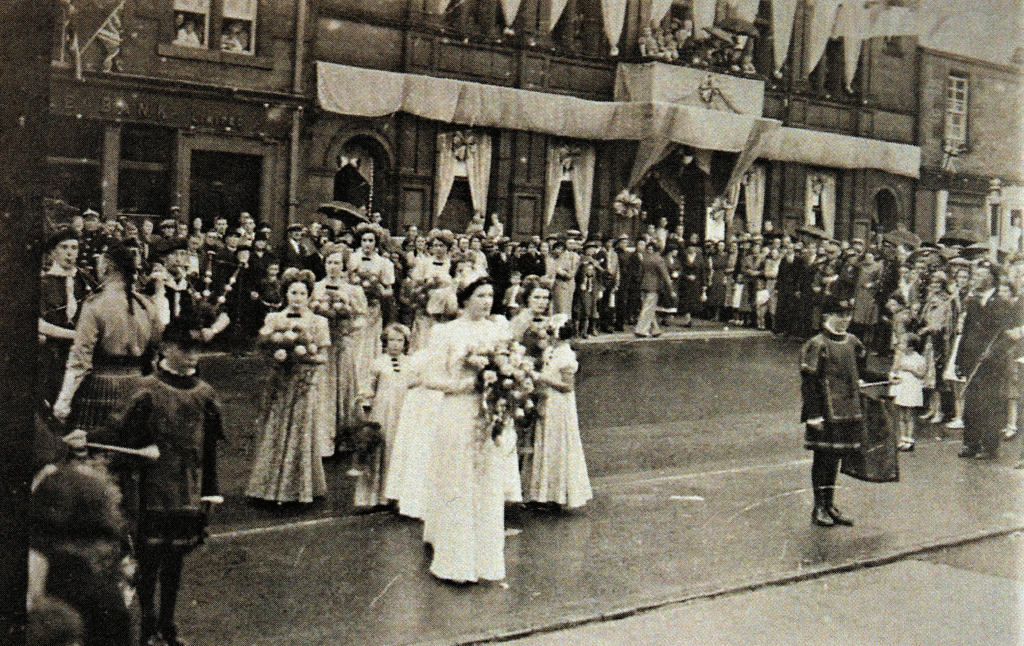
Lace Queen day belonged in the streets and at Recreation Park. It joined the industrial life of Darvel to the town gala, with the Queen and her party moving through crowds who knew the factories, families and faces involved.
The photographs record more than formal portraits. They show packed pavements, children in the party, decorated cars and the town gathered around a tradition of its own making.
The interruption
Eva Morton was crowned in 1939. The Second World War brought the annual ceremony to an end, and no Lace Queen was crowned during the 1940s.
The tradition returned in 1950. The gap changed the sequence, but not the appetite for the occasion.
The complete roll
Darvel’s Lace Queen
Darvel’s Lace Queen
Stirling Auld & Co
Alexander Jamieson & Co
Smith & Archibald Ltd
Mathew S Mitchell & Co
Alexander Morton & Co
James McInness & Co
Stirling Brothers Ltd
Stirling Auld & Co
The final Queen
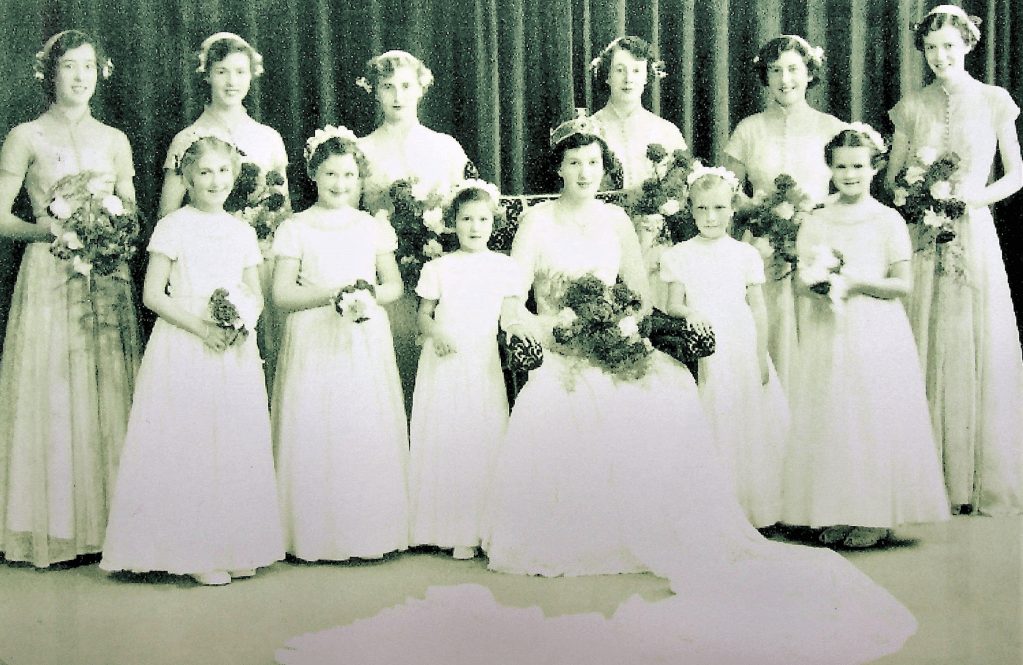
Jean Murdoch of Stirling Auld & Co became the final Lace Queen in 1953. The tradition had lasted only ten ceremonies, but its photographic record reaches across generations.
People still recognise relatives, workplaces and parts of Darvel in these pictures. That is why the complete collection belongs in public view, not squeezed into the middle of the story.
The photographic record
The archive brings together 33 photographs, arranged year by year with the known names of Queens, attendants, flower girls and page boys.
A few identifications remain uncertain. They are marked clearly, because an honest gap is more useful than a confident mistake.
Browse the complete photo archiveThe work behind the record
Much of what is known about the tradition was brought together by Peter Orr in The History of Darvel Lace Queens, compiled in 2020. This page and archive preserve that work while making room for corrections and further identifications.